We got tired of fake Claude. So we built UnoRouter.
Outages every other week. Premium models silently swapped for cheap clones. We snapped, shipped our own router, and made it paranoid about both. Here is the launch story.
The cheap AI API market has two problems. Providers go down a lot, and some of them quietly forward your request to a weaker model while still charging you for the flagship. UnoRouter is built to fix both.
Stay online when providers don't
Cheap upstreams are cheap for a reason. They rate-limit, throttle, and drop connections under load. When one degrades, UnoRouter routes the same request to another healthy provider serving the same model, automatically. Your application doesn't see the outage. You don't rewrite your code. You just keep shipping.
Every model is the real model
Not every gateway serves what it advertises. Some forward premium model names to cheaper substitutes and hope you don't notice. UnoRouter validates authenticity on every model we list: we probe identity and behavior end to end, and if a provider lies, we cut them. When you call Claude, you get Claude. When you call GPT, you get GPT.
Works in the terminals you actually use
A model is only useful if it works in your tools. We test every model end to end for HTTP completion, streaming, and tool calling. Those three capabilities are what AI terminal harnesses depend on. If a model is in our catalog, it works in Claude Code, Codex CLI, Gemini CLI, and any OpenAI-compatible client. No surprise 'streaming not supported' failures mid-session.
What's next
We ship weekly. Expect more models, tighter health signals driving smarter fallbacks, richer cost and latency dashboards, and deeper integrations with the terminals and IDEs you already live in.
Ready to try it? Grab an API key or browse the model catalog.
Many image models advertise multi-reference editing, but availability across resellers varies wildly. We sent a fixed 6-image scene-composition prompt to every image channel in our catalog. 332 channel runs, 136 unique models, 54 with at least one verified passing provider.
We probed 8 popular Claude resellers for 17 days. 183 of their channels were not Claude at all. Most were Kiro Cascade or Codeium wearing a Claude name tag. Names, numbers, and the script we used so you can test your own provider.
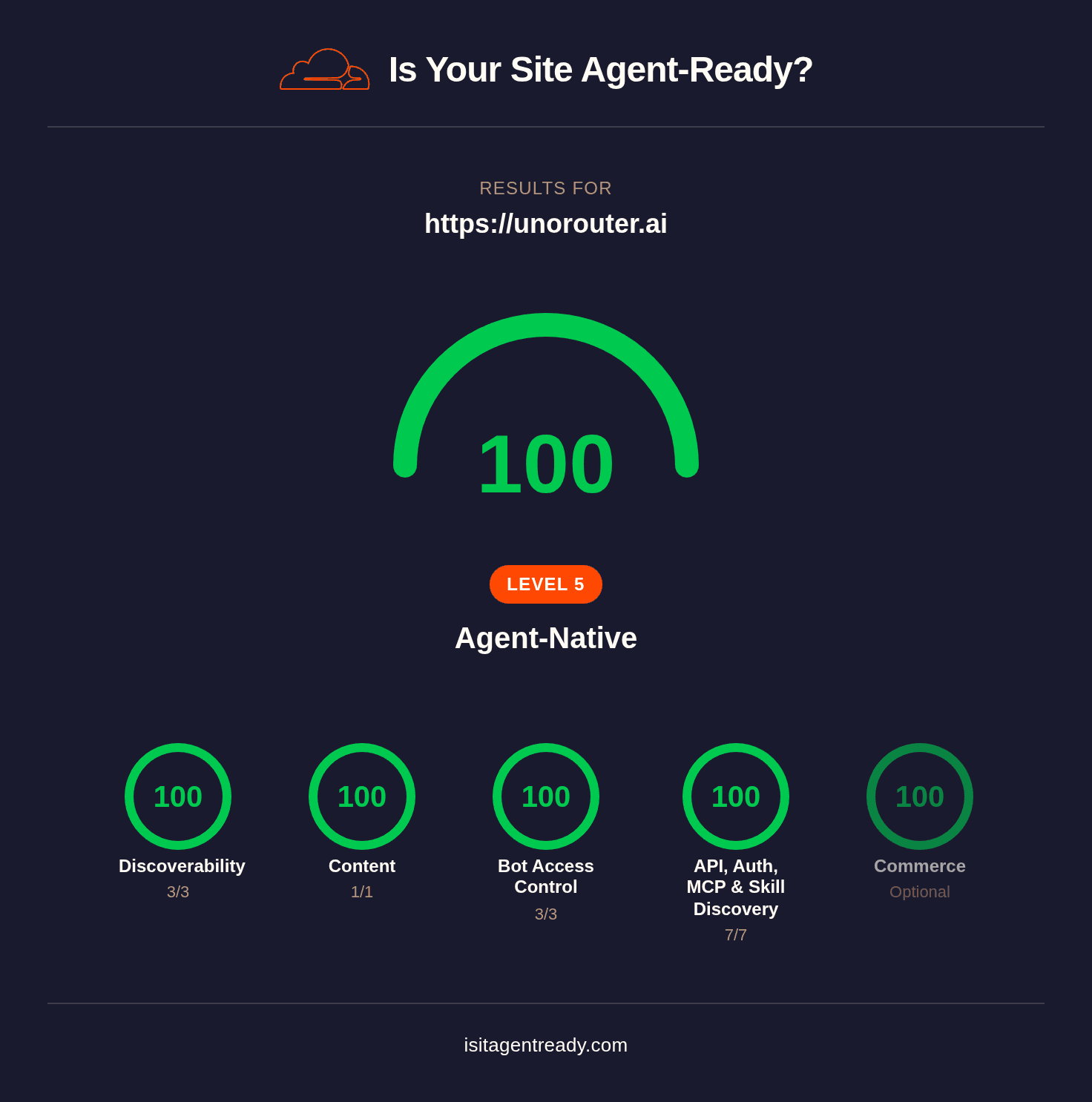
Cloudflare just shipped a scanner that grades how ready your site is for AI agents. We hit a perfect 100/100 and the top Level 5 rating. Here is exactly what it checks and why most sites fail.